



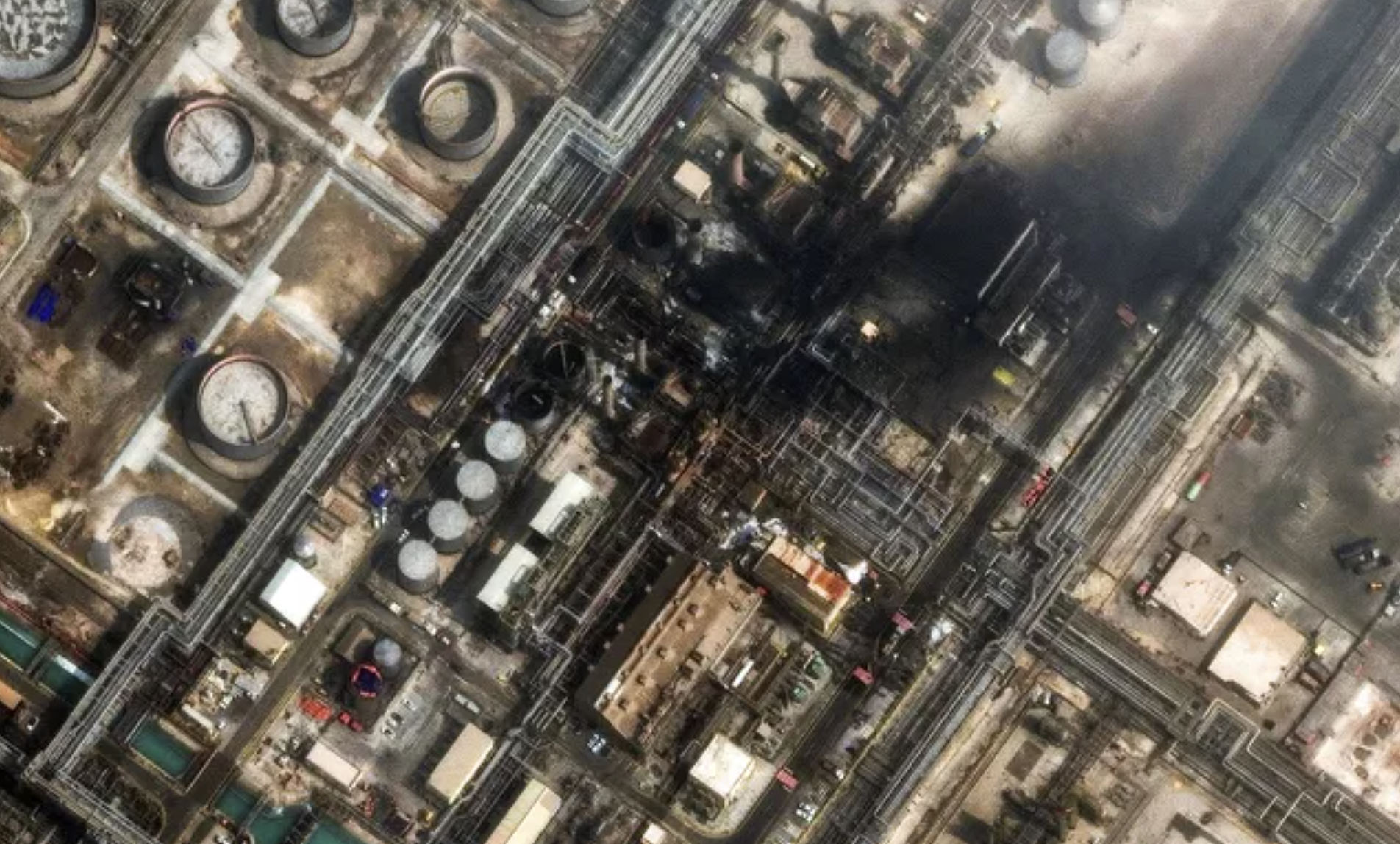
How quickly will the closure of the Strait of Hormuz force Arab Gulf crude oil exporters to shut-in production? It all depends on spare storage capacity. Geospatial intelligence can help us figure it out.
In the absence of export outlets, oil producers need somewhere to put the oil. The closure of the Strait is testing the limits of their storage capacity.
Iraq is a case in point. It has relatively low storage capacity relative to production. And so it has been the first to announce production cuts.
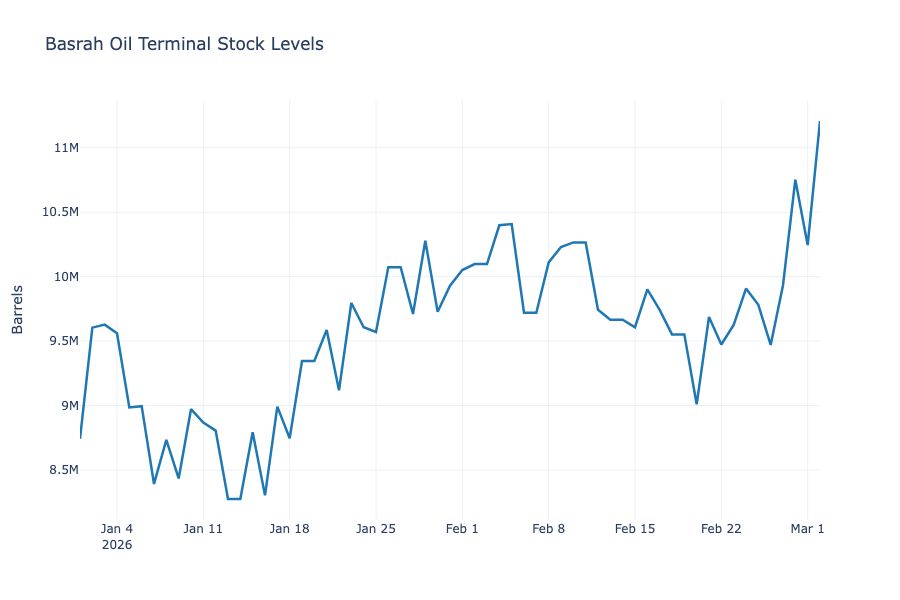
The Basrah terminal in Southern Iraq exported roughly 3.5 million barrels per day of seaborne crude prior to the conflict, but the infrastructure is now at a breaking point. Our real-time satellite monitoring highlights the bottleneck:
• The Ceiling: Inventories have surged to 11.2 million barrels in the first two days of the war, leaving effective spare capacity at less than two days of export volume.
• No Plan B: Basrah holds two-thirds of Iraq’s total onshore storage and appears to be poorly connected with the country’s other storage facilities. With the Strait restricted, there is simply nowhere else for the oil to go.
• The Fallout: The Rumaila oil field has already been forced to cut production in half, slashing 0.7 mb/d from the global market.
The Takeaway: In a war-driven supply crisis, “spare capacity” isn’t just about what is in the ground, it’s about how much room is left in the tanks.
How is your supply chain accounting for downstream bottlenecks? Let’s discuss how satellite-driven transparency can clarify the path through regional volatility.
In the news
- See us discuss this issue in the Financial Times (Financial Times)
- Devon Energy to Buy Coterra for $21.5 Billion to Create Shale Giant (WSJ)